Programme, Poster or Phone Screen? Choosing a Stadium Keepsake
Choose a stadium programme, poster or phone screen for useful match details and a record of the visit that suits your habits, space and crowd.
Which stadium record will you actually use after the match: a programme, a poster or the screen you carried there? The choice depends on what you want to remember and how you prefer to keep information: close at hand, on a wall, or in a digital archive. Each format tells a slightly different story of the visit.
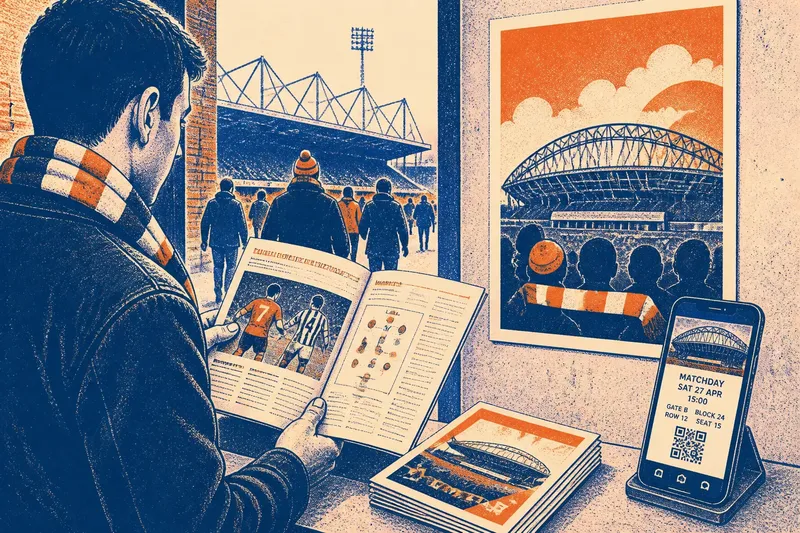
A printed programme can gather names, fixtures and editorial material in one object. A poster turns the event into a visible memento, while a phone screen is best at carrying details that may change. Think of them as different containers, like a notebook, a framed picture and a calendar: each holds something well, but none does every job.
Choose by purpose
Start with the question you want the object to answer later. Are you trying to recall who played, keep a striking design, or find a current detail while moving around the ground? That distinction is more useful than asking which format is best in general.
- Choose a programme if you want a compact account of the event, with printed context you can browse at your own pace.
- Choose a poster if the artwork, date or venue matters more to you than a bundle of changing practical information.
- Choose a phone screen if you need information that can be updated or searched, and you are comfortable keeping a digital record.
These choices can overlap. A programme might include a poster-like cover; a phone can preserve a photograph of a printed item. But each has a natural strength, and choosing around that strength helps avoid carrying or saving something you do not value.
When programmes fit
A match programme suits the reader who likes to browse. Player profiles, team lists, short essays, club notices and sponsor pages can make it a small publication rather than a mere list of facts. Its contents vary by event, so it is sensible to look at a sample or description before buying if particular material matters to you.
Print also gives information a fixed form. The line-up or editorial text remains as it appeared in the edition, which can make the programme useful as a record of what the organisers presented that day. That permanence is a strength for memory, though it means late changes may not appear in the printed pages.
Consider how you would use it after leaving. A programme can be read again at home, lent to a friend or kept with other match-day paper. If you want a record that captures the surrounding atmosphere, you might add a note on the cover or keep a ticket alongside it; the object alone cannot tell you what you noticed or who you went with.
Say you attend a cup tie with a relative who follows the squad closely, and you want something to talk over on the journey home. A programme with player profiles and a team sheet would suit that purpose; you could mark a memorable passage and write the date inside, leaving a clear personal trace without expecting the booklet to preserve every detail of the afternoon.
When posters fit
A poster is the strongest choice when the event’s visual identity is what you want to keep. A bold illustration, a distinctive typeface or a venue name can bring the occasion back at a glance. Unlike a programme, it does not ask you to read through a sequence of pages; its job is to make one image or message linger.
That makes posters especially suitable for a room, studio or shared space where you want a visible reminder. Before choosing one, consider whether you have somewhere appropriate to display it and whether you prefer the original paper surface or a photograph of the design. A poster kept rolled in a drawer may be less useful to you than a small printed card or a digital image.
Posters are usually selective. They may show the event name, teams, date or venue, but they are not a dependable source for detailed schedules or later changes. Treat them as a visual record, not a substitute for event information. The distinction matters when a keepsake also needs to help with practical decisions.
When screens fit
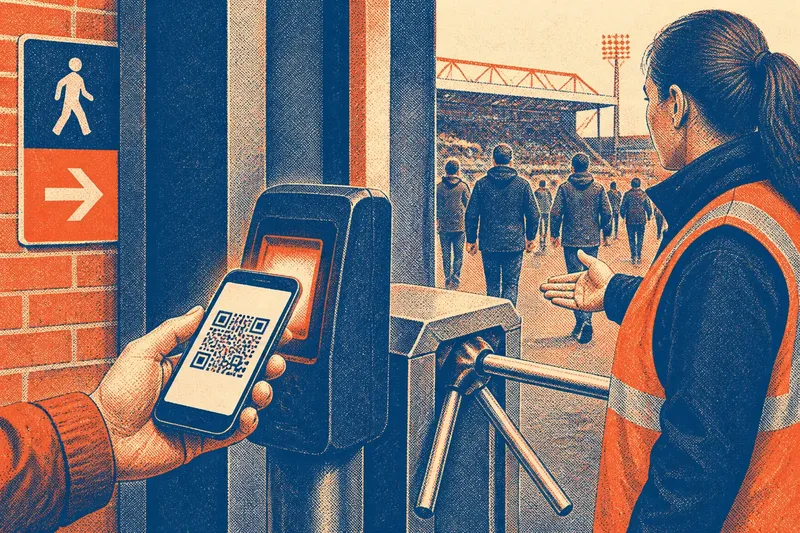
A phone screen is the flexible choice for details that can change: digital tickets, fixture information, venue updates, maps or a saved event page. Search and links can make it easier to find one particular detail than leafing through printed pages. The screen can also hold photographs of a programme or poster, bringing a physical record into a searchable collection.
Its convenience depends on the file and the device. A link may stop working, an app may no longer display an old event, and a photograph can become buried among everyday images. If a digital record matters to you, save the relevant image or document where you can find it later, and give it a useful name that includes the event or venue.
A screen is also less suited to being a lasting display object. It offers access rather than a material presence: you can revisit a saved image, but it will not sit on a shelf or carry the feel of paper. Choose digital when portability, search or updating matters more than having a physical keepsake.
Match the format to you
Different visits call for different records. Use these situations to make the choice concrete:
- You enjoy reading about the teams: a programme is likely to be the most satisfying, particularly if it includes profiles or editorial features you can revisit.
- You want a striking reminder at home: a poster fits if you have a place to display it and care most about the event’s visual identity.
- You need current practical details: use the phone screen for information that may be revised, and save a local copy of anything you want to retain.
- You are collecting a personal record: choose the format you will actually revisit, then add a brief note about the people or moment that made the visit yours.
- You prefer to travel light: a digital copy avoids carrying paper, while a small programme may be a better fit than a large poster if you still want a physical item.
For a visit with several purposes, combining formats can make sense: use a phone for changing details, then choose one printed object for the memory. There is no need to keep every item simply because it was available. A deliberate choice makes a collection more legible than a pile of souvenirs with no clear connection.
What should you keep?
Does a programme preserve the match itself?
It preserves the printed account and information in that edition, not everything that happened on the pitch or in the stands. Add your own short note if you want the object to recall a particular moment or companion.
Can a poster replace event details?
Usually it works better as a visual memento than as a full information source. Keep a separate current source for schedules or updates that may change.
How can I keep a digital record findable?
Save the file or image rather than relying only on a link, then use a clear name and a dedicated album or folder. Include the venue or event in the name so it is easier to retrieve later.
Is it worth keeping more than one format?
Yes, if each item has a different purpose: for instance, a screen for updates and a programme for reading afterwards. If the items repeat the same information and you do not revisit them, choose the one that means most to you.
Keep the context
Whatever format you choose, a little context helps it remain meaningful. Note the date, the venue and who was with you, either on a programme, in a poster’s digital file name or in the caption of a saved photograph. Keep the note brief and specific: the sound from a particular stand, a conversation during the interval or the detail that made the design memorable.
For match-day information, follow the event organiser’s current notices and any instructions attached to the item, since formats and local arrangements differ. Treat a printed edition as a snapshot and a screen as a source that may change; neither should be assumed to contain every detail you need.
The best stadium keepsake is the one that fits the way you remember. If you return to words and names, keep the programme; if you want the event on a wall, choose the poster; if you value searchable, updateable details, save the phone-screen record. A short note of your own can make any of them feel less like event merchandise and more like a record of being there.