A First Stadium Visit: Plan Your Meeting Points Before You Go
A first stadium visit is easier to share when everyone knows where to meet, what to do if plans change and how to regroup after the final whistle.
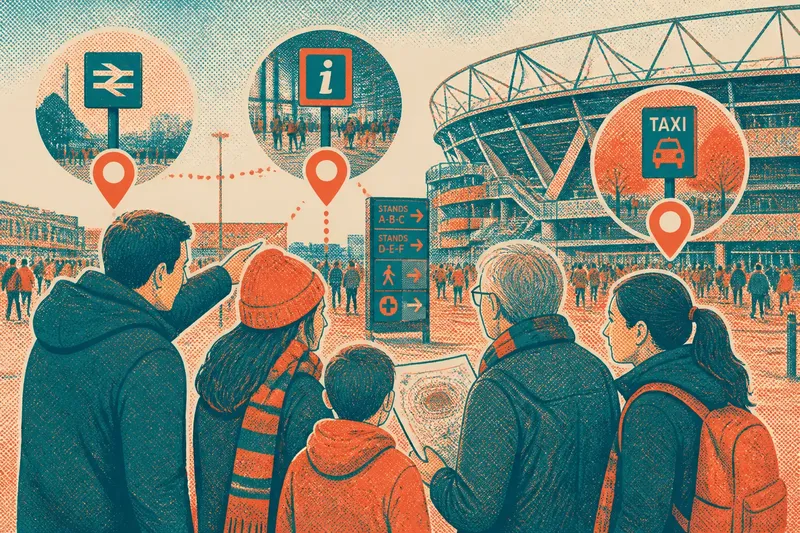
Where would you meet your group if your phone went quiet just as the crowd began moving? A first stadium visit is easier to share when you agree on that answer before setting off, then choose a second place for later in the day. The aim is not to choreograph every step. It is to make a busy outing feel manageable, even if people become separated.
Think of the plan like a spare key: useful because it is ready before you need it, and much less useful if only one person knows where it is. A clear meeting point should be easy to describe, safe to wait at and open at the time you expect to use it. Around a sporting ground, those conditions can change from the approach to the last whistle.
A week ahead
Start with the group, not the map. Ask who is coming, who needs to stay together, and whether anyone may want to move at a different pace or leave early. Include children, older relatives and anyone who might find noise, dense crowds or long waits difficult. Agree how each person can contact the others, but treat a phone as an aid rather than the whole plan.
Check the club or venue’s visitor information for the public transport stop, accessible routes, entry arrangements and any restrictions on bags or items. Look for named, publicly accessible places near the ground: a station concourse, a signed taxi rank, a particular side of a well-known square, or a staffed information point. A venue map can help, but remember that a spot inside the ground may require a valid ticket and may not be reachable once people have entered different sections.
Choose two meeting places with different jobs:
- Before entry: a recognisable place outside the crowd’s main flow, close enough to find without blocking a path.
- After entry: a point each person can reach from their own seating area, such as a named concourse feature or an agreed public-facing section marker, if venue arrangements allow it.
- After the event: a place outside the immediate exit stream, on the side that suits your planned route home.
These need not be three separate places. One may serve more than one purpose if it remains accessible and easy to identify. Check opening arrangements and any venue-specific restrictions once; follow the venue’s instructions and local rules if they differ from your plan.
Three days before
Turn vague directions into words everyone can use. “By the station” could mean several entrances; “outside the north-side ticket office, beside the fixed blue sign” is easier to picture. Use permanent features rather than a food stall, temporary display or person’s clothing, all of which may disappear or change.
Send the plan to the group in a message and ask each person to confirm it in their own words. That small check catches the classic mix-up between a meeting point and a meeting time. Share a simple map pin as a supplement, not a substitute for a description: mobile coverage, battery life and map orientation can all complicate a crowded approach.
Set a clear arrival window and a sensible waiting limit. For example, people might agree to wait at the outside point until the group’s stated departure time, then move together towards the entrance. If someone is delayed, they should go to the next agreed point rather than trying to catch the group in a moving crowd. Keep the rule simple enough that a first-time visitor can recall it without scrolling through a long chat.
The day before
Review the plan against the latest practical information: a transport change, a road closure or an altered entrance can make a familiar landmark awkward. If the original point is unavailable, choose a replacement that is still public and easy to reach. Tell everyone what changed and name the old point as cancelled; two competing locations are worse than one imperfect but shared choice.
Agree a fallback for weak phone contact. One option is to set a fixed time to return to the same point, with a second time if the group still has not reunited. Choose a place where waiting is permitted and where a person can stand without obstructing others. If the group includes a child or someone who may need extra support, agree in advance which trusted adult stays with them and which venue staff or official help point to approach if the group is separated.
Make sure everyone knows the names of the other attendees and has a way to identify the group without disclosing unnecessary personal information. For children, use an age-appropriate plan and explain that they should seek help from identifiable venue staff rather than wandering to search for relatives. Adults should not rely on a child remembering a phone number under pressure.
On arrival
Meet outside the ground before people split towards different entrances or seating areas. Once together, confirm the route each person will take if they need to leave their seat, and point out the nearest staffed help point or clearly marked information desk. Do not choose a narrow stair, doorway or barrier as a regroup spot: people need room to pass, and a stopped group can create trouble for everyone.
Say you are visiting with a friend who has a different entrance from yours. You agree to meet first beside a named station sign, then to use a signed information point inside the public concourse only if both routes reach it. If the friend’s entrance is delayed, you go to the agreed outside fallback at the stated time rather than searching through the queue; the observable result is a clear next move for each person, not a chase through the crowd.
Before taking your seats, make sure the inside point is genuinely reachable from both sections. If it is not, do not force a meeting across restricted routes. Keep together until each person has identified their own section’s nearest suitable help point, then agree that anyone separated will seek staff assistance and wait for the group’s next message or scheduled check-in.
When plans change?
What if the meeting place is blocked?
Do not wait in a queue, doorway or moving stream. Go to the named fallback, send a short message if possible, and keep the group’s agreed waiting time in mind.
What if my phone battery dies?
Follow the pre-agreed place-and-time plan rather than borrowing a stranger’s phone or roaming around. If the group does not reunite, ask identifiable venue staff for help and explain where you were meant to meet.
What if someone leaves early?
Agree before the event whether that person should message the group, wait at the post-event point or head directly to a safe, known destination. A person who is leaving should not assume everyone else has seen a notification.
What if we are separated inside?
Use the section-specific help point or follow venue staff directions; do not try to cross closed areas or push against the crowd. Keep children and anyone needing support with a trusted adult while the rest of the group follows the agreed contact plan.
After the final whistle
Exits can turn a familiar place into a slow-moving crowd, so do not make the gate itself your regroup point. Pick a public landmark beyond the immediate flow, then wait there only if it is safe and permitted. If your group plans to take different routes home, settle any final coordination before people disperse rather than expecting a clear call amid the noise.
Once reunited, take a moment to check that everyone is ready to leave and knows the next destination. If someone is missing, stay with the agreed plan, contact them through the available channel, and seek help from venue staff if needed. Avoid splitting the group further to search unless staff advise a safe way to do so.
A first stadium visit does not need a complicated itinerary. Give the group one clear place before entry, a workable fallback, and a calm rule for regrouping after the event. The most useful meeting point is not the most dramatic landmark; it is the one every person can identify, reach safely and remember when the crowd gets loud.